When a Septic Inspection Fails: Leach Field Replacement Guide
Buying a home and your septic inspection failed? Learn what a bad leach field means, what replacement really costs, how long it takes, and how to plan around closing.
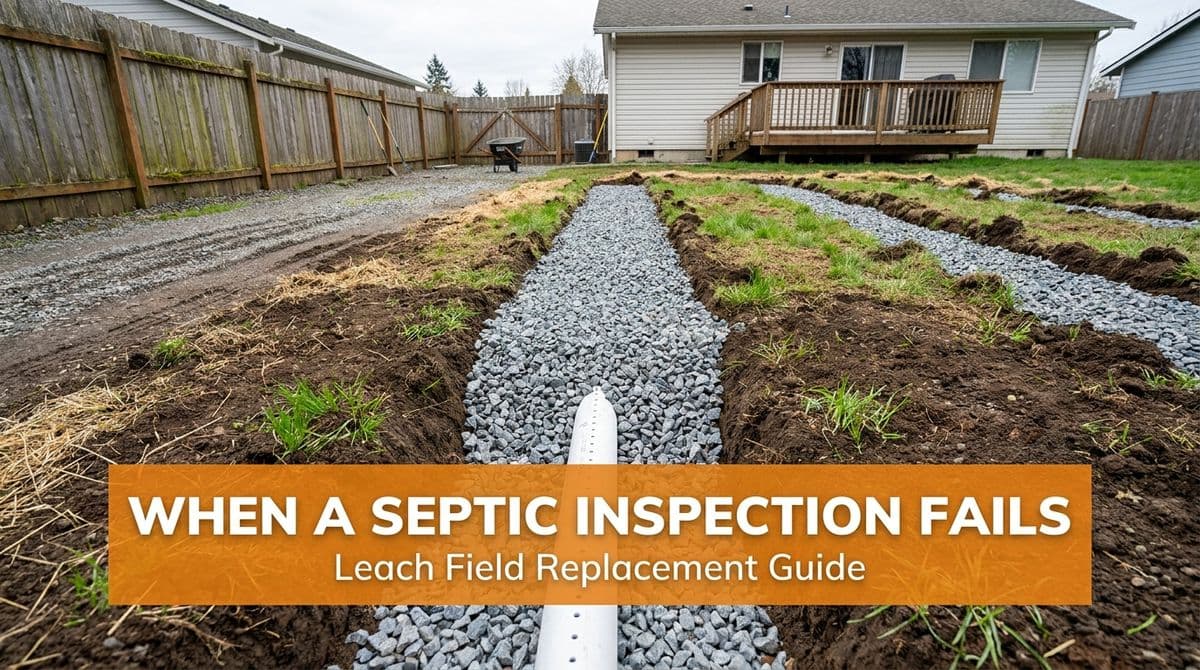
When a Septic Inspection Fails During a Home Purchase
We recently got a call from a homebuyer — let’s call him Mark — who was right in the middle of buying a house when he got news no buyer wants to hear: the septic inspection failed because the leach field was bubbling water up through the soil.
The tank and pump had recently been replaced and were in good shape, but the leach field (also called a drain field) had reached the end of its life. The sellers didn’t want to pay to fix it, and Mark needed to know: What will this cost? How long will it take? Can we get it done right after closing? And what should I be asking the contractor?
If you find yourself in Mark’s shoes, this is exactly what you need to know about leach field replacement costs, timelines, and next steps when a septic inspection fails during a home purchase.
Why a Leach Field Fails – And What “Bubbling” Means
In Mark’s case, the inspector saw water “kind of bubbling up under the soil” over the leach field. That’s a big red flag that the field is saturated and not absorbing effluent the way it should.
Common signs the leach field has failed include:
- Soft, spongy, or constantly wet ground over the field
- Visible bubbling or standing water, even in dry weather
- Strong sewage odors in that area of the yard
- Backups or slow drains in the house (though not always)
When this happens during a home inspection, lenders, inspectors, and town officials will generally expect the system to be repaired or replaced to current code — and that usually means a new leach field.
How We Estimate Leach Field Replacement Costs
One of Mark’s first questions was, “Is there any way to estimate a cost without seeing it, or do you have to go to the site?” The honest answer: we can give a ballpark, but to give a real number we need to review the septic design.
For his four-bedroom home, he had a design that called for about 24 plastic chambers in the leach field. That told us a lot — the size of the field, the type of system, and roughly how much excavation and material would be involved.
Things that affect cost include:
- Bedroom count / system size – More bedrooms = larger required leach field.
- Type of leach field – Plastic chambers vs. stone & pipe vs. advanced treatment units.
- Site conditions – Is the yard flat or sloped? Wet? Rocky? Tight access for equipment?
- Tree clearing & site work – Overgrown or wooded areas cost more to prepare.
- Distance to sensitive areas – Nearby rivers, wells, or property lines can trigger stricter design requirements.
Without naming exact numbers here (they vary widely by region), it’s fair to say a leach field replacement is usually a five-figure project for a typical three- to four-bedroom home. The best way to sharpen that number is to send your contractor:
- The septic design from the MLS or town records
- The inspection report/photos showing the failure
- A brief description of the yard (slope, trees, access)
With just the design in hand, we were already able to give Mark a much tighter cost range than “it could be anything.”
Booking the Work: Timeline Around Your Closing Date
Another big concern for Mark was timing. The sellers didn’t want to do the work. He was planning to close on August 5th and asked, “How far in advance do we need to book with you to get this done right after closing?”
Here’s how timing typically works when you’re buying:
- Before closing: Share the design and inspection with us so we can quote, schedule, and line up permits.
- Permitting time: Depending on your town, approvals can take anywhere from a week to several weeks.
- Scheduling: In busy seasons, we often book out a few weeks. For Mark, having a firm closing date let us reserve a spot and plan to bring equipment in the day they closed.
- Construction duration: Many straightforward leach field replacements take about 2–5 working days once we’re on site, weather and complexity depending.
If the septic tank and pump are in good condition (as they were in this case), that can save both time and money because we’re focused on the leach field only.
What Happens On Site: Clearing, Excavation, and Restoration
Mark’s future leach field area was a bit overgrown and partly in the woods. He suspected there would be some tree clearing and site work needed before we could even start the septic work. That’s common, especially on older or rural properties.
A typical leach field replacement process looks like this:
- Locate and mark existing tank, lines, and field based on the design and on-site verification.
- Clear the area – Remove brush, small trees, and any old walkways, patios, or structures in the way.
- Excavate and remove the failed field components (old chambers, stone, or pipe).
- Install the new leach field to current code using the system type on the approved design.
- Inspection by the town or engineer, if required.
- Backfill and rough grading so the yard drains properly.
Because we also handle excavation, hardscaping, and, when needed, tree work through trusted partners, we were able to talk with Mark about removing some failing brick walkways and a brick patio that needed to be ripped out anyway. If you’re already opening up part of the yard, it’s often a good time to tackle related projects.
Smart Next Steps for Homebuyers Facing a Failed Leach Field
If your septic inspection fails due to the leach field while you’re under contract, here’s what we recommend:
- Get the septic design. It’s usually in the MLS packet or on file with the town. This is critical for accurate pricing.
- Share everything with one contractor. Send the design, inspection report, and your target closing date.
- Clarify who’s paying. Decide with the seller whether they’ll repair, credit you at closing, or adjust the price so you can handle it.
- Lock in a tentative schedule. Even if you don’t own the house yet, we can often reserve a post-closing window.
- Ask about add-ons. If you need tree clearing, old patios removed, or grading improved, it may be more cost-effective to do it while we already have equipment on site.
A failed leach field feels like a deal-breaker, but it doesn’t have to be. With the right information — and a clear plan for cost, timeline, and scope — you can still move forward confidently and end up with a home that has a safe, reliable septic system for years to come.